Sleep tracking gets the clock right, not the deep sleep.
In a sleep lab, seven trackers caught at least 93% of sleep but only 18% to 54% of wake. What they measure well is when you sleep; deep sleep and REM are estimates.

What the research actually shows about sleep, light and attention. Mechanisms rather than tips, with a source next to every number.
Five adults spent a December week in tents and got more than 13 times the light of their usual routine. Their body clocks moved 2.6 hours earlier while they still got up at the same time. Here is what that means for your winter mornings.
· ReadIn a sleep lab, seven trackers caught at least 93% of sleep but only 18% to 54% of wake. What they measure well is when you sleep; deep sleep and REM are estimates.
Every 20 minutes, 20 seconds of looking into the distance: in 29 people with tired eyes, the eye strain score fell from 11 to 8 in two weeks. What the rule does, what it does not, and a timed morning.
Overnight language audio will not teach you anything new. A meta-analysis of 91 experiments shows what sleep does instead: it strengthens what you learned that evening. Here is the evening and the morning, with times.
For 6 weeks, 33 adults in Bath either ate breakfast or drank only water until noon. Resting metabolism stayed the same in both groups. What changed was how much they moved before lunch.
In a two-week experiment, 221 students reported less inattention in the week their phones stayed silent and out of reach. Here is a timed morning block, and an honest account of what fresh air, coffee and breaks were shown to do.
One hour on a treadmill at 07:00 brought the start of the biological night forward by 0.9 hours, while the same hour at 22:00 pushed it back. Here is what that means for when you train, and what fasted cardio does.
One sentence that fixes when and how you will start had a medium-to-large effect across 94 tests. Here is a timed version for the first ten minutes of tomorrow morning, and where the evidence stops.
In a school trial with 232 teenagers, the slow sleepers who used a 15-minute body scan at bedtime reported falling asleep faster. Here is a ten-minute version for bed, and what the research can and cannot yet show.
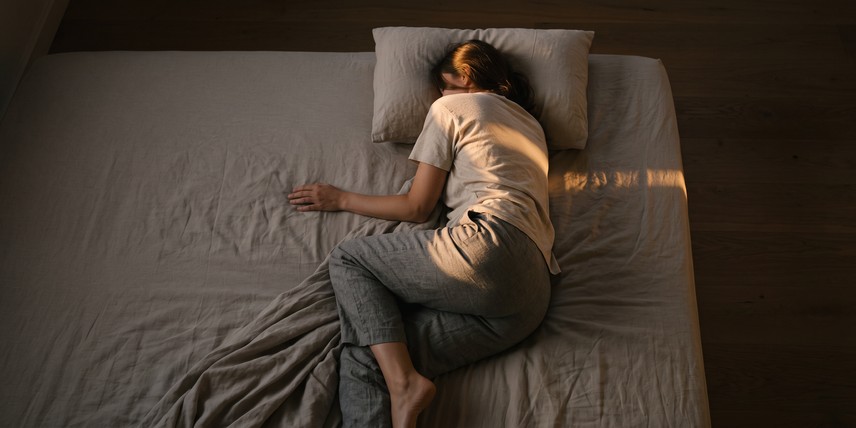
Measured at home, adults spend just over half their time in bed on their side, about a third on their back and very little on their front, and they change position 1.6 times an hour. No study has found one best position for everyone, but there are three situations where it counts.
In Danish bedrooms an open window brought overnight carbon dioxide down by more than half, and people slept longer. A tilted window also lets in the street, only about 15 dB quieter. Here is what the measurements found for air, door and noise, and how to decide tonight.
Before a full moon, sleep starts later and runs shorter, by minutes rather than hours. Wrist sensors put the shortest nights 3 to 5 days before the full moon, and the reason sits in the early evening, where your own lamp outshines the moon.
In the best trial, four weeks without Facebook freed 59.58 minutes a day and lifted mood by a small margin. When another trial measured sleep at the wrist, it did not move. Here is what that means for the break you are planning.
Three weeks at two hours of phone a day measurably reduced sleep problems in a trial with 111 students. Android has the tools for it, but the best known one counts down to midnight rather than to your evening.
A grey screen cost 84 young adults in Amsterdam about 20 minutes of phone time a day, and they opened the phone just as often. The settings for iPhone, Pixel and Samsung, and why grayscale belongs to the evening.
In a week on Do Not Disturb settings, 221 students were slightly more attentive than in a week with every alert on. How to set it up for the night, who still gets through and why your alarm keeps ringing.
Ten young adults slept one night under 100 lux of ceiling light, and their hearts beat faster all night without them noticing. What the study shows, what the big cohorts add, and how dark your bedroom should be tonight.
Of 54 four-week programmes tested on 61,293 gym members, 45% worked while they ran and only 8% afterwards. A new habit typically takes a median of 66 days, so this plan counts day 31 as part of the challenge.
Night Shift moves the colour of the screen, not the amount of light. In a week-long trial with 167 young adults it made no measurable difference to sleep. Here is what to set alongside it, with times.
The same short stretch became a habit after a mean of 106 days when done in the morning and 154 when done at night. Which good habits form faster, where they belong in your day, and what the studies cannot tell you.
Every list online gives the same advice: keep it cool, exercise, skip the wine, try pink noise. The studies rank it differently. One evening workout added 1.3 percentage points of deep sleep, and the most marketed lever added no minutes at all in the laboratory.
The 21-day rule comes from observations of plastic-surgery patients, not from habit research. Studies that timed it found medians of 59 to 66 days, and individuals anywhere from 4 to 335. What carries you through is a fixed cue of place and time.
In 4,098 employees, HRV in the first three hours of sleep was lower on days with alcohol, even after one or two drinks. Training raised it clearly in trials, but mostly in programmes of 12 weeks or more.
Across 191 studies, resting heart rate after endurance training sat 2.7 to 5.8 beats per minute below that of people who did not train. That is small enough to vanish in a sloppy reading, so the plan starts with a week of measuring only.
In a semester-long study of 159 students, the number of temptations people met predicted who reached their goals, and the effort they put into resisting did not. The idea of willpower as a draining tank barely survived two large retests.
Up to five things in about five minutes each evening: that was the exercise in the studies, and 65 adults afterwards reported 7.58 instead of 7.06 hours of sleep. Against other exercises gratitude did no better, and how often to write is more open than the notebooks suggest.
After a night of broken sleep, a strong coffee before a glucose drink raised blood sugar about 50 percent more in 29 young adults. The popular 90-minute wait, by contrast, has no trial behind it at all.
In a lab study of 36 adults, a weekend of sleeping in pushed the end of the biological night about 1.4 hours later. That is why Monday is often the hardest morning, and it is only one of three causes worth telling apart.
In a Dutch trial, 3,018 working adults ended every shower cold for 30 days. They took 29% fewer days off sick, felt ill just as often, and 30 seconds worked as well as 90.
After one week with only natural light, eight adults had body clocks running about two hours earlier. In a morning routine the light counts for more than the list, and a new habit takes closer to 66 days than 21.
In a Stockholm sleep lab, 31 habitual snoozers slept 23 instead of 29 minutes in their last half hour. Tests and mood showed no clear difference, so the real question is how much sleep you had before the alarm.
The 8 seconds came from a marketing report that borrowed them from a website. Research measured something else: 47 seconds per screen, minds elsewhere 46.9 per cent of the time, and a trial in which two brief switches held performance for 40 minutes.
Three trials with 357 students in total have pitted fixed breaks against self-chosen ones. The schedule changed how the work felt, not how much got done, and 52/17 and 90-minute blocks have never been tested at all.
NASA's famous 26 minutes were never tested; they were simply how long tired pilots slept. The best-supported nap is 10 minutes of sleep, and those minutes only start once you are asleep.
In ten healthy men, caffeine's half-life ran from 2.7 to 9.9 hours. Smoking shortens it, the pill stretches it, and the well-known cut-off for your last coffee only fits the average.
Unfinished tasks follow you home until they have a plan, and in one experiment a plan cut their intrusions from 3.00 to 1.77. The work does not have to be done, only scheduled, and that takes three minutes at 17:25.
In one observational study 57 per cent of strands of work were interrupted, on average after 11 minutes. The cost shows up as stress and errors, and a fixed morning block is the simplest answer.
A dinner one hour before bed left 20 people's sleep unchanged in the lab and pushed their blood sugar peak 18 per cent higher. The famous three hours come from reflux research, where they have a real reason.
The early-afternoon dip comes from the body clock, not the plate, and it hits harder after a short night. The best-measured answer takes 10 minutes and starts with a coffee.
Five minutes writing tomorrow's to-do list, and in a sleep lab people fell asleep after 15.82 minutes instead of 25.09. The steps that matter more come two hours earlier, with the light and the warm water.
Thought-stopping, the most common advice, has never been tested on sleep, and suppressing a worry made the night look worse in a study of 60 people. Two things have better data: a detailed scene in your head, and a five-minute to-do list before lights out.
In a head-to-head lab study, 20 minutes of muscle relaxation, deep breathing and guided imagery relaxed people equally well. For falling asleep, relaxation methods are worth about seven minutes on average, and muscle relaxation suits nights when the body is tighter than the mind.
We could not find a single study behind the 16 to 18 °C in nearly every guide. In 50 homes, older adults slept most efficiently between 20 and 25 °C, and under the duvet an entirely different temperature is at work.
A slow pulse in your headphones is meant to drag your brainwaves into deep sleep. Five of 14 EEG studies saw that happen, and the best sleep trial found 35.3 extra minutes of deep sleep but no faster sleep onset.
White, pink or brown, the colour of the noise matters less than how loud it is. In the lab, 46 dB of broadband sound shortened sleep onset, 50 dB of pink noise cost REM sleep, and earplugs beat pink noise against traffic.
One round of 4-7-8 takes 19 seconds, so three fit into a minute. What studies measure is a slower pulse, and in a direct comparison plain breathing at six breaths a minute did better.
Almost every breathing exercise comes down to the same thing: breathe slower and breathe out longer. At about 5.5 breaths a minute heart rate swings the furthest, and that is also where the evidence stops.
In a trial with 38 young adults, blue-blocking glasses moved workday bedtimes 36 minutes earlier for a week and left social jetlag untouched. What the gap between your workdays and weekends is, how to measure it, and what has actually made it smaller.
Genes account for only 25 minutes of sleep timing between the most extreme groups, morning light for far more. What a night owl can shift in three weeks, and what it takes.
Among 45,202 students, every extra hour on a screen after getting into bed went with 24 minutes less sleep. A fixed evening window removes that hour, and it does not have to be perfect on the first night.
An analysis of 6064 cycles recorded in a sleep laboratory found a range of 60 to 150 minutes for 95 per cent of the values, and the first cycle was the shortest. For your alarm that means the clock time matters more than the cycle.
Most body clocks run slightly longer than a day and have to be reset every day, mainly by light. After a week of daylight only, the clocks of eight adults sat about 2 hours earlier.
A limit moves minutes, not habits. In a randomised trial with 70 iPhone users it was about 29 minutes a day, while the underlying pattern did not shift. Three settings and one passcode decide whether it survives the evening.
In a two-week lab study, 6 hours a night left healthy adults as impaired as a night without any sleep. Their own sense of sleepiness barely moved after the first days.
The usual lists have ten to fifteen rules, all presented as equally important. A 2015 review found little direct evidence for most of them, while three rules are well measured, including the one about coffee whose cost you cannot feel.
After 17 to 19 hours without sleep, people scored on some tests as badly as at a 0.05% blood alcohol level. Over years the bill shows up in diabetes and mortality, and there the regularity of your nights counts too.
41 per cent of adults in Germany fall asleep within ten minutes, and one in seven needs more than half an hour. The famous 60-second tricks were never tested on sleep onset, but a to-do list was.
Seven to nine hours is the advice, which leaves a two-hour gap every night. In a Tokyo sleep lab, young men’s own need averaged 8.41 hours, more than an hour above what they slept at home, and none of them had noticed.
Late at night the feed holds you less through what it shows than through the fact that it never ends. What a meta-analysis of 43 studies and two trials found.
Phone use in bed went with longer sleep latency and a higher heart rate, and the same use outside bed did not. What overnight data from 75 people show, and why radiation is the wrong question.
In a survey of 8,937 adults, more than a third woke up at least three nights a week. What happens in those hours, and why watching the clock keeps you awake.
In motion data from 60,977 adults, the regularity of sleep predicted mortality better than its length. What that means for your alarm, and what an all-nighter really does.